AI Sales Assistant
A chatbot talks to the customer. This one also tells you what to do next.
AI answers the WhatsApp enquiry, qualifies it with short questions, scores it with a breakdown you can actually see, and hands your rep an ordered list. Documents arrive through the same conversation.
- The score is not a black box
- Documents flow from the chat
- Built around your process

The Enquiries Arrive. The Order Does Not.
The problem is not finding leads. It is not knowing which of today's thirty are real.
How it works today
Messages land in WhatsApp. Someone opens it in the morning and starts with whatever is on screen. Who said what, which one was serious, which one was already called back — all of it buried in chat history. The person asking for documents writes separately, and the photo they send stays in someone's phone gallery. At the end of the day, nobody can answer "how many did we speak to".
How it works here
The AI has the first conversation itself: sector, turnover, whether they need instalments, what they use today. A score comes out of what it collected, and you can see which factor added or removed how many points. The enquiry lands in the right queue, and when a rep opens the screen the next customer is already decided. The customer sends their document inside the conversation and the system files it against the application.
The AI does not close the sale. It puts the person who will close it in front of the right customer, with a full file.
Four Steps
From the moment the message lands to the moment your rep picks up the phone.
It talks
The assistant greets the customer and qualifies them with short questions. One question per message, no repeating what it already knows, and it speeds up when the customer writes tersely.
It scores
What it collected becomes a priority score from 0 to 100. The breakdown is visible: which factor added points, which one took them away.
It takes the document
The customer sends paperwork inside the conversation. The system files it immediately and opens an application record; when the rep asks for it, AI reads the document and fills the fields.
It queues it
The enquiry drops into a queue based on its state. When a rep opens the screen, the answer to "who am I calling now" is already there.
The Score Is Not a Black Box
Most tools say "the AI gave it 78" and stop there. A salesperson needs the reason before trusting a number. In this system every point is written down — the rules below are the real ones.
What adds points
- Priority sector+30
- Monthly turnover band (graded)+30
- Wants an instalment solution+20
- Paperwork received+20
- Company older than six months+15
- AI conversation note (maximum)+20
What removes points
- Only wants information-25
- Very new company (under three months)-10
- Low-margin sector-15
- AI conversation note (minimum)-20
An enquiry in a priority sector, in a high turnover band, asking for instalments and having already sent their paperwork lands above this line. When the rep opens the list, that record sits at the top.
The score is not calculated once. It is recomputed on every new signal — handover from the assistant, an arriving document, a status change, a fresh AI note. Thresholds and sector definitions are managed from the panel; changing a rule does not mean changing code.
The Assistant's Behaviour Contract
This is where the difference sits. Most bots are set up as helpful assistants and they are chatty. This one was written with sales discipline; the rules are explicit in the prompt and editable from the panel.
- No emoji, no decoration. Plain, formal, reassuring language.
- One question per message. The message ends with the question.
- The same question is never asked twice; information already given is not repeated back.
- If the customer writes tersely, the assistant speeds up rather than padding.
- Price and rates are not given early — sector and turnover come first.
- If the customer goes quiet, one reminder only. No chasing.
- Once the required information is complete it stops asking and hands over to a person.
- Message length is capped; nobody reads a screenful of text.
None of this is fixed. If your sales language is different, the contract is written differently.
What the System Covers
It covers what happens after the conversation, which is why it is an operations system rather than a chatbot.
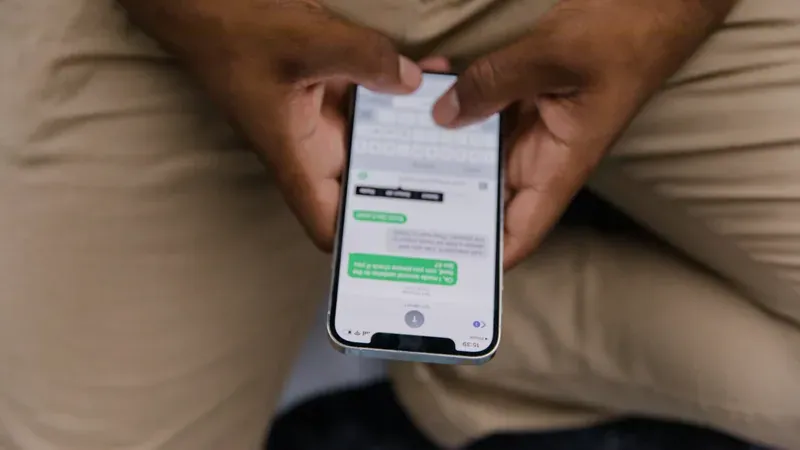
Autonomous First Conversation
The assistant asks its questions in a set order, records the answers and follows up what is missing. The question list, its order and which answers are required are all managed from the panel.

It Reads the Conversation and Judges It
AI reads the whole exchange, scores how serious the customer is and justifies that judgement in a single sentence. The justification stays on the record, so a rep who disagrees can see the reasoning.

Documents Flow From the Chat
The moment a customer sends paperwork over WhatsApp the file is archived and attached to an application record. Reading is not automatic — when the rep asks, AI extracts the fields from the document.

Queues and Cockpit
Enquiries spread across queues according to their state, and a cockpit screen shows the day's progress, the next customer and performance by hour.

Handover to a Person
Once the required information is complete the assistant withdraws and the record passes to a rep. The handover message is sent by the system; the assistant never tries to close the sale itself.

Managed From the Panel
The assistant's prompt, question flow, score thresholds and sector definitions are edited through the interface. Changing behaviour does not mean going back to a developer.

Reminders and Tasks
Status changes generate tasks and reminders automatically. When a record is marked won or closed, open reminders drop by themselves — nobody chases a dead lead.

It Works Without the AI Too
If the AI service does not answer, the system does not stop; scoring carries on without the AI contribution. A sales operation should not depend on one API staying up.
Permissions and Field Masking
A rep sees only the records assigned to them. Beyond that, they see their own customer's turnover but not the margin — sensitive fields are masked at record level, not just hidden in the interface.
Built Around Your Business
This system was built for a payments consultancy, but the mould does not belong to that business. The questions, the scoring rules and the assistant's language are written around your sales.
Your questions
The questions that qualify a customer differ by sector. The flow, its order and what is mandatory are set to your sales process.
Your scoring rules
You know what a good lead means in your business. Which factor is worth how many points, and which situation sends a record to the back of the line, is decided with you.
Your language
The assistant's tone, how formal it is, what it says early and what it holds back — all of it is a written contract. Whatever your brand sounds like is what gets written.
Your system
The installation runs on infrastructure you control. Conversations, customer records and the document archive stay with you.
Comparing the Three Options
An off-the-shelf chatbot tool, an AI agency integration, and an operations system built for you.
| Comparison | Off-the-shelf chatbot | Agency integration | Çelenk Yazılım solution |
|---|---|---|---|
| What it does | Chats, fills a form | Wires a bot into your existing CRM | Talks, scores, queues |
| Scoring | Usually none | Whatever the CRM ships with | Rule-based, with a visible breakdown |
| Reason for the score | — | Black box | A written one-sentence justification |
| Document flow | Forwards a file, then stops | Needs a separate module | Archive, extraction and application record connected |
| Who to call next | Does not say | Whatever the CRM lists | Queues and a cockpit screen |
| Bot behaviour | Template replies | General-purpose assistant | Written sales discipline |
| If the AI goes down | The bot stops | The flow stops | The system keeps working |
| Where the data lives | Vendor cloud | Vendor cloud | Your own server |
Who It Is For
Any business whose enquiries arrive on WhatsApp and who cannot get to all of them.

Businesses With a Sales Team
Teams taking dozens of enquiries a day without the hours to call them all. The system says which record to take first, so the team spends its time on the likeliest work.

Service and Dealer Networks
Structures that collect enquiries centrally and distribute them to reps or dealers. Assignment, queues and permission boundaries are part of the system.

Consultancies and Brokers
Work that qualifies a customer with a standard set of questions and then collects paperwork. One chain, from conversation to document.

Processes That Collect Documents
Applications, memberships, credit or subscription flows that need paperwork. What the customer sends lands straight in the application file.
Running inside a payments consultancy
The system was built for a consultancy that advises small businesses on card payment solutions, and it is in daily use there. Enquiries from the marketing site and from WhatsApp are answered by AI, qualified, scored and distributed into the sales team's queues. Paperwork such as tax certificates is collected inside the conversation and attached to the application record. The same panel also runs turnover and expense analytics, dealer assignments and the blog.
- priority score with a visible breakdown
- 0-100priority score with a visible breakdown
- status codes across 8 working queues
- 17status codes across 8 working queues
- points from the AI conversation note
- ±20points from the AI conversation note
How It Gets Built
We have to learn your sales first; the software comes after that.
We listen to your sales process
Where enquiries come from, who handles them, what you ask, and which customer counts as a good customer for you. The scoring rules come out of that conversation.
We write the assistant's contract
Question flow, tone, what is held back and where the handover happens all get written down. We review it together, so you know what it will say before it goes live.
Installation and connection
The system goes onto your infrastructure, the WhatsApp line is connected, and team accounts and permissions are set up.
Tuning on real conversations
In the first days we read the incoming conversations together and tune the assistant. The score thresholds settle on real data rather than guesses.
Frequently Asked Questions
The ones that come up most often.
Will the customer realise they are talking to a machine?
They might, and we do not try to hide it. The assistant introduces itself as an assistant and does not imitate a person. The aim is not to fool anyone; it is to compress the first three minutes of information gathering so the real conversation starts with a full file.
What happens if the AI answers something wrongly?
What the assistant may say is bounded in the prompt: it gives product information, holds back pricing, and hands over on anything it does not know. If it still says something wrong, the whole conversation is on record, the rep sees it and corrects it. The assistant does not make the decisions that matter — approval, pricing, closing.
Can we set the scoring ourselves?
Yes, and you need to. Which sectors matter, the turnover threshold and which situations send a record to the back of the line are set to your business. Some thresholds can be changed from the panel on the spot; if the rule structure itself changes, we update it.
Which AI model does it use?
The current installation uses Google Gemini. The model is a setting rather than something welded into the architecture — if you prefer a different provider, that layer can be swapped.
How does it connect to WhatsApp?
The installation connects to your WhatsApp line and messages land in the system. Which connection method suits your volume and usage is something we settle in the conversation, because that choice affects both cost and constraints.
Where are the conversations and customer data kept?
On infrastructure you control. Chat history, customer records and the document archive stay with you. Conversation text is sent to the model for the AI assessment; we agree that flow and the retention policy during setup.
We already have a CRM. Can it connect?
It can, but first we should discuss something. The value here is not the bot itself — it is having conversation, score, queue and documents in one chain. If your existing CRM can carry that chain, integration makes sense. If it cannot, you end up with half a solution. We make that call together.
What size team is it worth it for?
It works with one rep and with a team. The real benefit appears when enquiry volume exceeds what the team can handle — that is exactly when ordering starts to matter. For a business taking a few enquiries a day the software may not pay for itself, and we will say so plainly.
How long does it take to build?
It depends on how clear your sales process already is. If you know your questions and your definition of a good customer, a few weeks. If the process needs to be worked out first, that is work we can do too, but it lengthens the schedule.
Is it a subscription or a one-off?
The software is built for you and runs on your infrastructure, so it is not a per-seat cloud subscription. The only unavoidable ongoing costs are the server and the AI model usage, both paid directly to those providers. The commercial shape we agree in conversation.
How much does the AI usage cost?
On the order of a few cents per conversation, varying with your volume. The conversation assessment and document reading make model calls; ordinary messaging does not. We work out an estimated monthly figure during setup, so it is not a surprise later.
Do you work with companies outside Ordu?
Yes. The work runs remotely, with meetings over screen share. Face-to-face work is also possible for businesses in Ordu and the wider Black Sea region.
Tell Us How You Sell
In an hour we can go through where your enquiries come from, who handles them and which customer is a good customer for you. Whether this system would earn its keep becomes clear in that conversation — and if it would not, we will tell you.